
Do you have an upcoming event that you would like to promote?
Then please send us the details to add to this events page.
International Medieval Congress 2026, Leeds
Events Sponsored by Digital Medievalist
TUESDAY, 7 JULY 2026
935 – Early Career Researchers in Digital Medieval Studies: A Round Table Discussion
9.00am–10.30am
Sponsor: Digital Medievalist Postgraduate Committee
Organiser & Moderator: Sebastian Dows-Miller, School of European Languages, Culture & Society, University College London
Digital Humanities (DH) methods are now well established, nowhere more so than in Medieval Studies, where digital methods continue to flourish. However, working with DH methods still brings a unique set of challenges and opportunities, particularly as an early career researcher. The interdisciplinary, international nature of the Digital Humanities means that routes into the discipline are often very diverse, ranging from trained medievalists who have incorporated digital methods into their work, to those who apply existing technical skills to the study of the medieval world. Meanwhile, the relative youth of the discipline means that navigating questions of teaching and research in the current institutional landscape can be difficult. This round table discussion, organised by members of the Digital Medievalist Postgraduate Committee, brings together early career scholars from across the discipline to discuss the challenges and opportunities of their diverse career paths.
Participants include Sebastian Gensicke (Fakultät für Geschichtswissenschaften, Ruhr-Universität Bochum), Catrin Haberfield (Department of English, Stanford University), Davide Pafumi (Department of English, University of Lethbridge, Alberta), and Cihan Şimşek (History, Nevşehir Hacı Bektaşi Veli University; Medieval History, Kilis 7 Aralık University; Medieval History, University of Szeged)
WEDNESDAY, 8 JULY 2026
1035 – Digital Medieval Studies, I: Digital Approaches to Manuscripts
9.00am–10.30am
Co-sponsor: Institute for Medieval Studies, University of Leeds
Organisers: Delphine Demelas, University of Southampton & N. Kıvılcım Yavuz, University of Leeds
The Digital Medieval Studies sessions bring together scholars interested in applying computational tools to medieval studies. The first session focuses on a variety of digital approaches to manuscript studies. Vickers provides a systematic analysis of the textual history of De Ordine ac Positione Stellarum in Signis, a ninth-century star catalogue in Latin, utilising both traditional and computational methods. Van der Loop offers a quantitative framework to examine the arrangement and frequency of paratextual elements in manuscripts and printed books such as paragraph marks and running titles through a case study of the Institutiones Iustinianae. Using two manuscripts from the St Gall Stiftsbibliothek collection, Bouressa discusses a digital methodology for detecting scribal changes in musical manuscripts, demonstrating how digital tools can assist in detecting patterns in musical scripts, production networks, and the circulation of musical knowledge. Tsui examines how digital tools enhance the systematic study of letters from the Song period (960–1279) in imperial China, offering new insights into their material features such as brushwork, seals, and paper textures.
Moderator: Laura K. Morreale, Independent Scholar
1035-a – Tracing the Transmission of De Ordine ac Positione Stellarum in Signis
Doris Magdalena Vickers, Universität Wien
1035-b – Studying Textual Articulation and Navigational Aids: A Quantitative Approach for Long Durée Studies
Janne van der Loop, Johannes Gutenberg-Universität Mainz
1035-c – Scribal Detection and Profiling in St Gallen, Stiftsbibliothek, Cod. Sang. 389 and Cod. Sang. 390
Kyrie Bouressa, Centre for Interdisciplinary Research in Music Media & Technology (CIRMMT), McGill University
1035-d – Epistolary Echoes: Digital Pathways into the Materiality of Manuscript Letters and Calligraphic Rubbings from Song China
Lik Hang Tsui, City University of Hong Kong
1135 – Digital Medieval Studies, II: Machine Learning, Model Development and Applications
11.15am–12.45am
Co-sponsor: Southampton Digital Humanities
Organisers: Delphine Demelas, University of Southampton & N. Kıvılcım Yavuz, University of Leeds
The Digital Medieval Studies sessions bring together scholars interested in applying computational tools to medieval studies. The second session considers how large language models (LLMs) can be specifically tailored to unlock the complexities of medieval texts. Menon and Tittel introduce HeidelBERT, the first language model designed for medieval French medical texts, enabling systematic analysis of technical terminology and semantic variation across centuries of medical writing. Schonhardt presents CanonBERT, a specialized AI model trained specifically on medieval canon law texts to support automated editing and analysis of this massive and complex legal tradition.
Moderator: Dominique Stutzmann, Institut de Recherche et d’Histoire des Textes (IRHT), Centre National de la Recherche Scientifique (CNRS), Paris
1135-a – From Vernacular to Vocabulary: Developing a Large Language Model for Medieval French with HeidelBERT
Ragini Menon & Sabine Tittel, Ruprecht-Karls-Universität Heidelberg; Heidelberger Akademie der Wissenschaften
1135-b – CanonBERT: Large Language Models for Editing and Analysing Medieval Canon Law Collections
Michael Schonhardt, Technische Universität Darmstadt
1135-c – Beyond the Formula: Reframing the Medieval Miracle Process through Digital and AI Analysis
Kara Kersh, Independent Scholar
1235 – Digital Medieval Studies, III: Exploring Manuscripts through Digital Methods
2.15pm–3.45pm
Co-sponsor: Institute for Medieval Studies, University of Leeds
Organisers: Delphine Demelas, University of Southampton & N. Kıvılcım Yavuz, University of Leeds
The Digital Medieval Studies sessions bring together scholars interested in applying computational tools to medieval studies. The third session showcases new and innovative ways to explore manuscripts using digital methods. Davis reports the results of her collaborative work (conducted with computer scientists, linguists, and AI Pattern-Recognition experts) using material evidence, imaging, and data analytics to hypothesize the original sequence of pages in the Voynich Manuscript (Yale University, Beinecke Rare Book & Manuscript Library, MS 408). Through selected projects from the Bavarian State Library, Allscher provides a comparative overview of hyperspectral, multispectral, thermographic and standard imaging systems as strategies for making text legible again. Duba outlines a digital workflow he developed to find and retrieve manuscript fragment images and metadata from e-rara.ch, the Swiss digital library for rare books, in order to publish them on fragmentarium.ms, Laboratory for Medieval Manuscript Fragments.
Moderator: Matthew Holford, Bodleian Libraries, University of Oxford
1235-a – Data Analytics and the Voynich Manuscript
Lisa Fagin Davis, Medieval Academy of America, Massachusetts
1235-b – Revealing the Invisible: Strategies for Spectral Investigations to Make Manuscripts Legible
Thorsten Allscher, Bayerische Staatsbibliothek
1235-c – Automating the Armchair: Leveraging the Bulk Digitisation of Early Prints for the Discovery, Identification, and Publication of Medieval Manuscript Fragments
William Duba, Université de Fribourg
1335 – Digital Medieval Studies, IV: Machine Learning, Reliability and Evaluation
4.30pm–6pm
Co-sponsor: Southampton Digital Humanities
Organisers: Delphine Demelas, University of Southampton & N. Kıvılcım Yavuz, University of Leeds
The Digital Medieval Studies sessions bring together scholars interested in applying computational tools to medieval studies. The final session addresses the essential yet often overlooked foundation of reliable digital scholarship: ensuring that automated tools function accurately and earn the trust of the scholarly community. Odstrčilík and Roček introduce CERatosaurus, a sophisticated tool for auditing handwritten text recognition datasets to identify and correct errors that could compromise the reliability of automated transcription models. Kalashnikova develops systematic preprocessing methods for training accurate handwritten text recognition models in 11th-12th century East Slavic Cyrillic manuscripts, showcasing unique challenges of these medieval book layouts and abbreviation systems. Hintersteiner evaluates the methodological challenges, potential biases, and sustainability issues involved in integrating large language models into medieval German textual scholarship, comparing commercial versus open source approaches.
Moderator: Delphine Demelas, Southampton Digital Humanities, University of Southampton
1335-a – Auditing Datasets for Automated Handwritten Text Recognition with CERatosaurus
Jan Odstrčilík & Martin Roček, Österreichische Akademie der Wissenschaften, Wien
1335-b – Transkribus Model Training for 11th- to 12th-Century Cyrillic Codices: Challenges and Possibilities
Olga Kalashnikova, Università degli Studi di Napoli L’Orientale
1335-c – Large Language Models in the Service of Medieval Text Integration: Wenzelsbibel Meets MHDBDB (Mittelhochdeutsche Begriffsdatenbank)
Julia Hintersteiner, Paris Lodron Universität Salzburg
1435 – Linked (Open) Medieval Data: A Round Table Discussion
7pm–8pm
Organisers: Delphine Demelas, University of Southampton & N. Kıvılcım Yavuz, University of Leeds
Moderator: Lisa Fagin Davis, Medieval Academy of America
Sponsored by Digital Medievalist, this round table discussion considers developments in the field of digital medieval studies with a focus on linked (open) data, a set of practices for publishing structured data on the internet. It brings together creators and users of linked medieval data across a variety of resources and platforms to discuss strategies for interoperability, best practices, and shared standards. These include Linked Open Middle Ages, the International Medieval Bibliography, Oxford Text Archives, Digital Scriptorium and a broader discussion of the possibilities provided by linked data initiatives. Newcomers to digital humanities are especially welcome to join the discussion.
Participants include Luise Borek (Union der deutschen Akademien der Wissenschaften), Melanie Brunner (University of Leeds), Megan Bushnell (University of Oxford), and Lynn Ransom (Schoenberg Institute for Manuscript Studies, University of Pennsylvania Libraries).
Reception Hosted by Digital Creativity and Cultures Hub, University of Leeds & Digital Medievalist
University House: Beechgrove Room
8.00pm–9.00pm
A reception hosted by the Digital Creativity and Cultures Hub at the University of Leeds and the Digital Medievalist community. Come, enjoy drinks and snacks, and confab about applications of digital technologies to medieval studies – all welcome!
FRIDAY, 10 JULY 2025
Digital Medieval Studies Institute
8.30am–7.30pm
Co-sponsors: University of Leeds Institute for Medieval Studies & University of Leeds Libraries
Organisers: Laura K. Morreale & N. Kıvılcım Yavuz
The Digital Medieval Studies Institute (DMSI) presents a full-day programme featuring workshops on digital scholarly methods specifically tailored for medievalists. The day-long DMSI introduces participants to a range of digital methodologies currently in use within the field of medieval studies and offers in-depth exploration through one of five workshop offerings. In addition to the workshops, there is a group meeting at the start, sessions of lightning talks at midday, and an end-of-the-day wrap up session that provides opportunities for networking with other scholars with shared interests. The primary goal of DMSI is for attendees to gain sufficient training during the one-day event to apply the skills acquired to their ongoing research and teaching in medieval studies. A drinks reception brings the day to a close. See the programme here: https://tinyurl.com/DMSI-2026-UK-Programme
This event needs to be prebooked. If you haven’t registered by 10 June, please fill out this form and we’ll get back to you if there’re spaces available: https://tinyurl.com/DMSI-2026-UK-Late-Registration
DMSI will be part of IMC 2027! If you are interested in attending DMSI next year, please contact the organisers at dmsi.hello@gmail.com
Do you have an upcoming event that you would like to promote?
Then please send us the details to add to this events page.
Digital Medieval Studies Institute
Established in 2023, the Digital Medieval Studies Institute offers one-day workshops on digital scholarly methods specifically tailored for medievalists. Offerings vary from year to year, but always aim to introduce participants to a range of digital methodologies in use within the field of medieval studies. The primary goal of DMSI is for attendees to gain sufficient training during the one-day event to apply the skills acquired to their ongoing research and teaching in medieval studies.
Participants select one of five workshop topics to explore in depth over the course of the day. These focused workshops are complemented by sessions of lightning talks at midday, as well as group discussions involving all participants. The day concludes with a social hour to facilitate networking among scholars with shared interests.
DMSI 2026
The Digital Medieval Studies Institute is presented in cooperation with the Digital Medievalist, the Newberry Library, and the Medieval Institute at Western Michigan University. Additional financial support has been provided by the College of Arts and Sciences at Western Michigan University and Western Michigan University Libraries. DMSI 2026 will take place on the campus of Western Michigan University on May 13, 2026, immediately preceding the 61st International Congress on Medieval Studies.
Workshop Offerings
- Building a Virtual Medieval Pilgrimage, Kalani Craig, Department of History, University of Illinois Urbana-Champaign
- From Digitized Manuscript to Digital Edition, Laura Morreale, Independent Scholar, and Nicholas Laiacona, Performant Software
- 3D Modeling from Photo and Video, Matthew Davis, Independent Scholar
- Handwritten Text Recognition for Beginners, Tobias Hodel, Digital Humanities, University of Bern
- Manuscript Description and Research in the Digital Ecosystem, L. P. Coladangelo, Digital Scriptorium, and Lynn Ransom, Schoenberg Institute for Manuscript Studies, University of Pennsylvania Libraries
Schedule of Events
8:30 – 9:00 a.m.: Gathering with Tea/Coffee
9:00 – 9:30 a.m.: Opening Assembly
9:45 – 11:45 a.m.: Workshop Session (1)
12:00 – 12:30 p.m.: Lightning Session (1)
12:30 – 1:30 p.m.: Lunch
1:30 – 2:00 p.m.: Lightning Session (2)
2:15 – 4:15 p.m.: Workshop Session (2)
4:30 – 5:00 p.m.: Closing Assembly
5:00 – 6:00 p.m.: Reception
Participation Fees
Registration for DMSI is done as part of the registration process for the International Congress on Medieval Studies. The participation fee for DMSI 2026 is $125; this is in addition to the regular registration price for the Congress.
Up to ten awards will be available to support attendance at DMSI. These awards will consist of participation fee waivers, and they also include subsidized registration fees for the Congress.
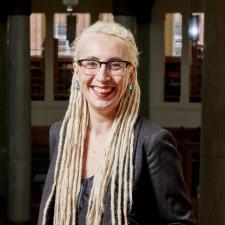
N. Kıvılcım Yavuz is Lecturer in Medieval Studies and Digital Humanities at the University of Leeds, where she is Programme Lead for the MA in Medieval Studies. Her research lies at the intersection of medieval studies and digital humanities, with expertise in two areas: European manuscript culture, especially the role of manuscripts as material artefacts in textual transmission and book history, and medieval historiography, focusing on the origin stories of peoples and nations. In digital medieval studies, her work centers on manuscripts, particularly digitization, the creation and interpretation of data and metadata, and the design of digital repositories. She is a member of the Advisory Council of Digital Scriptorium and, since 2022, has been Director of the Executive Board of Digital Medievalist.
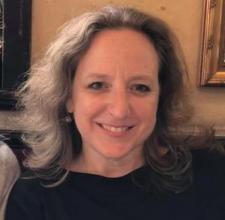
Laura K. Morreale is an independent scholar whose research centers on medieval French-language writing outside of the Kingdom of France and Italian urban historiography. She is currently an Associate of the Standing Committee on Medieval Studies at Harvard University and the Co-founder and Project Coordinator for the open-access resource, Middle Ages for Educators, at Princeton University. Dr. Morreale currently serves as the Digital Humanities Reviews Editor for Speculum.

